


NEHW 2026 : Day Three
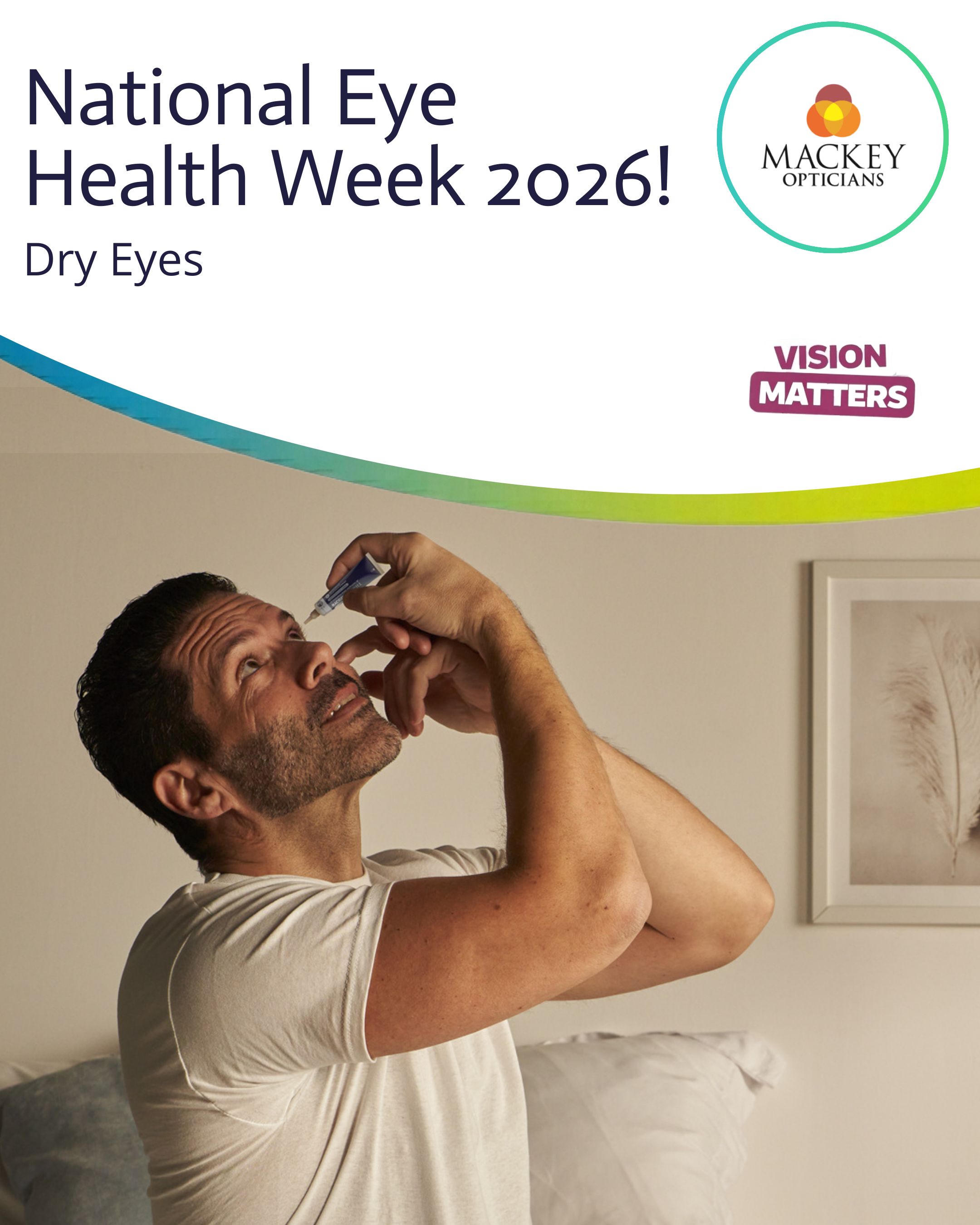
Understanding and Managing Dry Eye Syndrome
Do your eyes feel gritty, burning, or unusually watery by 3 PM? You are far from alone.
Dry Eye Syndrome is one of the most frequent concerns patients bring to our consulting rooms at Mackey Opticians. What many people don't realize is that chronic dry eye is rarely just a temporary annoyance, it is a recognised clinical condition that occurs when your eyes either don't produce enough tears or when the quality of those tears deteriorates.
Why Are Your Eyes Feeling So Dry?
Modern lifestyle factors combined with natural physiological changes can place heavy strain on your ocular surface and tear film. Understanding what triggers your symptoms is the first step toward finding lasting comfort.
1. Screen Strain and Digital Fatigue
Whether working at a computer, scrolling on a smartphone, or watching TV, prolonged screen time drastically alters how we blink. On average, working at screens reduces natural blink rates by over 50%. Fewer full blinks mean your tear film isn't refreshed as frequently, leading to rapid tear evaporation and end-of-day dryness.
2. Hormonal Shifts and Aging
Tear production is closely linked to hormonal balance. Natural physiological shifts—particularly during menopause and healthy aging—can lead to decreased oil production by the tiny glands in your eyelids (Meibomian glands). When these oils are lacking, your tears evaporate far too quickly, leaving the surface exposed and irritated.
3. Contact Lens Wear
Contact lenses rely on your natural tear layer to remain hydrated and comfortable. For regular wearers, environmental factors or insufficient tear quality can cause lenses to draw moisture away from the eye itself, leading to persistent end-of-day discomfort and redness.
The Paradox: Why Do Dry Eyes Water So Much?
One of the most confusing symptoms of Dry Eye Syndrome is excessive watering. When the surface of your eye becomes dry and inflamed, it sends an emergency distress signal to your nervous system. In response, your lacrimal glands flood the eye with reflex tears.
However, these reflex tears are mostly water and lack the essential oils needed to lubricate the eye effectively. As a result, they wash over the surface without sticking, leaving your eyes feeling just as irritated as before.
Targeted Diagnostics: Moving Beyond Off-the-Shelf Eye Drops
Reaching for generic over-the-counter eye drops might provide fleeting relief, but it rarely addresses the root cause of the problem.
At Mackey Opticians, we take a structured, clinical approach to dry eye management. We offer dedicated dry eye assessments designed to analyse the complete health of your tear film and eyelid margins:
Tear Layer Analysis: We pinpoint whether it is your lipid (oil) layer or watery aqueous layer that is depleted.
Meibomian Gland Evaluation: We assess the tiny oil-producing glands along your lash line to check for blockages or inflammation (Meibomian Gland Dysfunction).
Targeted Heat-Mask Regimens: Controlled heat therapy helps melt solidified oils within blocked glands, restoring the natural, protective oil barrier to your tears.
Customized Lubrication Plans: We prescribe specific, preservative-free drop formulations tailored precisely to your tear chemistry and lifestyle.
Restore Long-Lasting Eye Comfort Today
You don't have to live with daily grittiness, redness, or screen fatigue. Tailored clinical solutions can make a dramatic difference to your everyday clarity and comfort.
Take the first step toward lasting relief by scheduling a specialized dry eye consultation with your local Mackey Opticians team.
Book your dry eye assessment online today or call your nearest practice.
Stay Up To Date With The Latest News
Be informed about our exclusive sales and top deals.